
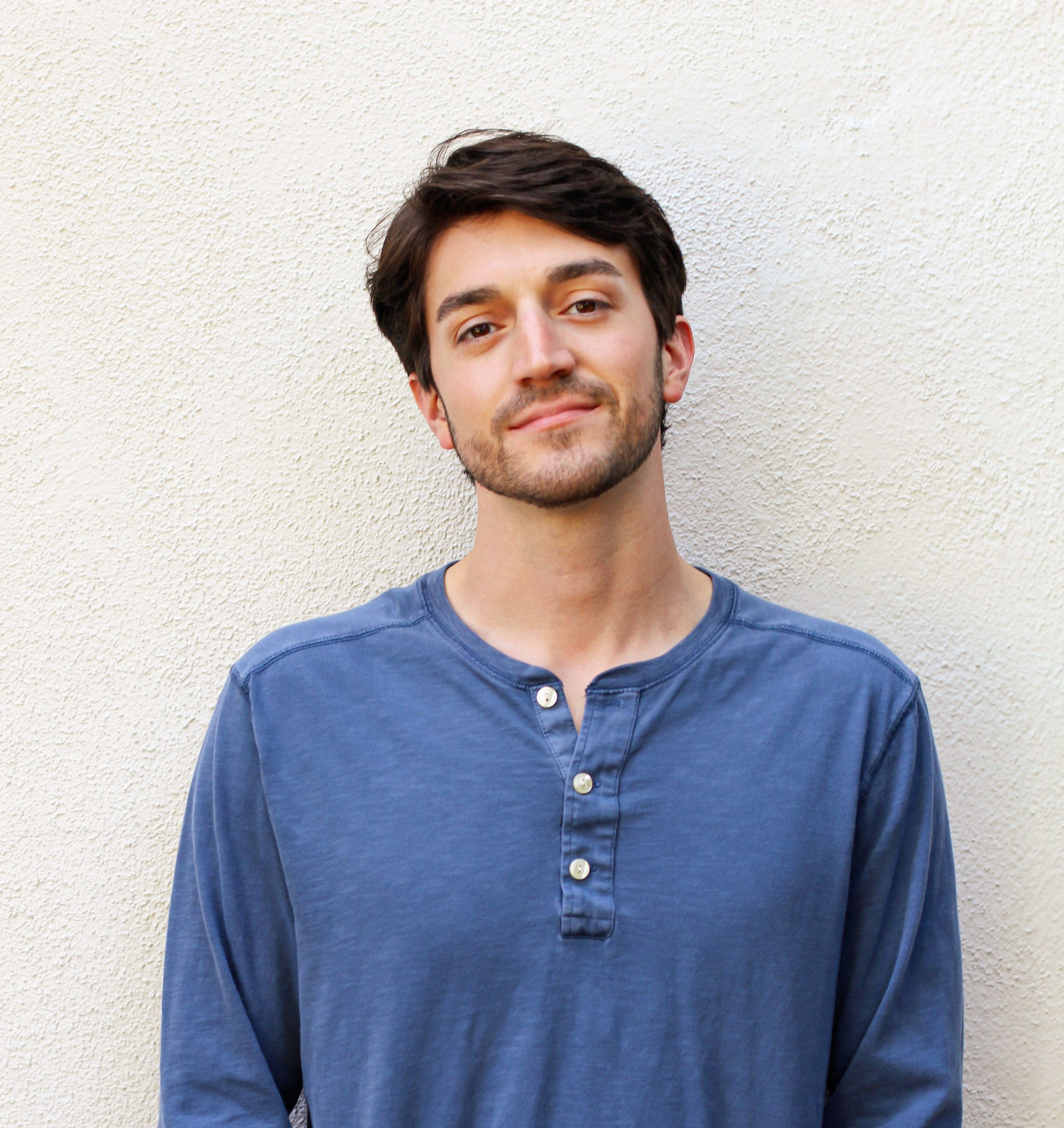
Grow Your Writing with Grant
Grant Chemidlin is the author of What We Lost in the Swamp (Central Avenue Poetry, 2023), a finalist for the Lambda Literary Award for Gay Poetry, as well as the chapbook New in Town (Bottlecap Press, 2022). He has been a finalist for the Four Way Books Levis Prize, the Philip Levine Prize, and Atlanta Review’s International Poetry Contest. Recent work can be found in The Los Angeles Review, Palette Poetry, Quarterly West, and the Academy of American Poets, among others.
Chemidlin received his MFA from Antioch University Los Angeles, where he worked under the guidance of distinguished poets such as Victoria Chang, Jaswinder Bolina, Chen Chen, Jenny George, Xochitl-Julisa Bermejo, and Josh Roark.
Chemidlin is also active on social media, with the goal of bridging the gap between literary poetry and the modern world. In 2020, he self-published an illustrated collection of micro poems titled He Felt Unwell (So He Wrote This), which became a viral sensation on TikTok.
Decide if Grant's Right for You with Our Mentor Interview
What excites you most about writing?
“For me, the most exciting part of writing is the discovery. I love being surprised by my own poems, not knowing where they’re taking me, or what new, strange images I will encounter on the way. A mentor of mine once said that poets are witches. And I kind of live by that now. As poets, we conjure language from the silence—that unknown, liminal space we all bump up against, then enter into while we write. Our poems change us. They change how we see the world and our own selves. And like spells, once cast, they go off and change others too.
Because of poetry, I’m now more present in my life. I notice the smaller things I never used to and ask questions I didn’t realize I needed to ask. I’ve also grown immensely into my queer identity, having learned through writing, how to be open, honest, bold, and vulnerable.”
What mindset does a writer need to grow?
“A writer needs to love writing. Simple as that. It’s so easy to get distracted by publishers and literary journals and book prizes. Of course, those are great achievements to strive for, but in my own experience, they never compare to the joy I feel while actually doing the writing. When we’re too worried about success, or comparing ourselves to other writers, we forget how wonderfully thrilling it is to be “unfinished,” to be constantly learning and growing. I’ve recently adopted a new metric of success: effort. I am successful, or my poem is successful, if I’ve really tried, if I’ve put in the time and the work, and taken risks.”
What three words best describe you as a mentor?
“Thoughtful. Funny. Generous.”
What makes a good writing mentor?
“In poetry, there is no right or wrong. There are an infinite number of ways a single poem can be crafted, so it’s a mentor’s job to help guide the poet through all those tiny, micro-decisions, to help them see all the options, and thus, deepen their understanding of what they really want the poem to do (or what the poem really wants to do). A good mentor listens. They ask questions, instead of simply giving answers. They introduce new styles and ways of thinking, without compromising a writer’s vision.”
What is your style of feedback?
“First, I like to provide my initial interpretation: what I see unfolding at the poem’s surface, the questions I feel rummaging beneath it, the ways in which the poem connects with my own life experience. This way, the writer may discover things happening inside their own poem that they haven’t yet noticed (one of the joys of poetry).
Then, I point to the micro: the sounds I love, what areas surprise or delight me, or maybe, confuse me. I give comments and line edits with the purpose of moving the poem in the direction I see the writer is trying to take it. I’m a big believer in giving tangible solutions, rather than just pointing out weak spots. I like to pitch ideas or words or images the writer can use as jumping off points to find whatever they feel is the strongest use of language. It’s my goal to help the writer realize their poem’s full potential, so they can make it as imaginative and unique and beautiful as it can possibly be.
All in all, I want my feedback to feel like a collaboration, a conversation between two writers, where no question is too silly to ask. “
What was the most recent "standout" book you read?
“Each Knuckle with Sugar by Sarah Levine blew me away. All of the imagery in its poems felt so fresh and strange and unique. I was delighted and moved. I finished the collection in one sitting and was so inspired I immediately started writing. Those types of books and reading experiences are rare—when we encounter something that unlocks a new door in us, in our own understanding of language and its possibilities.”