
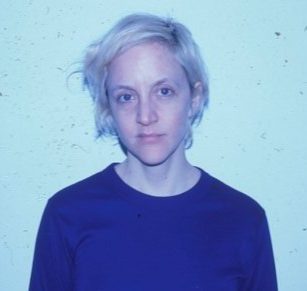
Grow Your Writing with Cynthia
Cynthia Cruz earned a BA in English Literature at Mills College, an MFA in poetry at Sarah Lawrence College, an MFA in Art Writing at the School of Visual Arts, an MA in German Language and Literature at Rutgers University-New Brunswick and a PhD from the European Graduate School where she wrote her dissertation on Hegel and madness.
She is the recipient of fellowships from Yaddo and the MacDowell Colony, as well as a Hodder Fellowship from Princeton University and a Guggenheim Fellowship. Her recent collection of poems, Hotel Oblivion, was a finalist for the Kingsley Tufts Award and the winner of the National Book Critics Circle Award. She is currently a Visiting Assistant Professor in the Department of English at the University of Notre Dame.
Spots Still Available
Apply to join Cynthia’s small group of writers that she will lead through our unique 12 week mentoring and workshopping program.
Decide if Cynthia's Right for You with Our Mentor Interview
What excites you most about writing?
“Writing is a means for me to work out the many questions I have about the world. In this way, writing serves as a kind of machine. Whether an essay, article, or poem, I enter the writing in unknowing. The writing, then, is the process of pursuing this unknowing, this question, to its end, an end that is often not an “answer” to the question, but, instead, an incremental move toward it. At the same time, poetry is also a means to put language to what is inarticulatable—that which exists outside of language. In this way, poetry is not a way of articulating, but, rather, of locating an alternative language capable of conveying, or enacting; poetry is a means of gesture, or showing, that which can not be articulated.
Poetry, because it allows me to put to words that which would otherwise remain enigmatic, helps me to better understand the world we live in while also helping me gain access to the otherwise often unconscious —thus unavailable—questions I have about the world,” Cynthia said.
What mindset does a writer need to grow?
“Curiosity is the most important “mindset” a writer needs to grow and learn. Curiosity implies a sense of wonder and unknowing, both of which are necessary. But also one needs a sense of curiosity both about the world and about language in order to remain engaged, and to be riveted and excited by writing.”
What makes a good writing mentor?
“A good writing mentor is someone actively engaged in their own writing, but also reading and continually learning about the world, who is able to share their knowledge—both lived experience and academic—with other writers. Crucial, too, is that a mentor have the ability and desire to listen to each student—to what they say and what their writing conveys—and work to find ways of accommodating each student’s writing and learning process.
For me, as a mentor, thus, I don’t make any assumptions about my students’ lives, experiences or backgrounds. Instead, I try to listen to each student and try to understand how I can best nourish their writing: to see how they might make their poems more what they are meant to be. These suggestions take the form of craft suggestions as well as suggestions for nonfiction and literary texts, films or artworks that share a kinship with the work.
Each work of writing is its own strange creature—often requiring entirely new craft choices in order to become the strange and beautiful writing it intends to be. As a result, there can be no one rule for all writing.”
What is your style of feedback?
“As a writing mentor, I provide line edits—comments and reflections on how the poem is working—and then overall thoughts on what I notice in the writer’s work and suggestions for further development. This might take the form of writing prompts or exercises, the suggestion of works of literature including the work of published poets, or theory. Rather than suggesting cuts or pointing of ‘what is not working,’ I prefer to read the work of my students and relay what I see, what I notice. In this way, students are able to gain access to what they often miss and generate new work based on these previous ‘blind spots.'”