
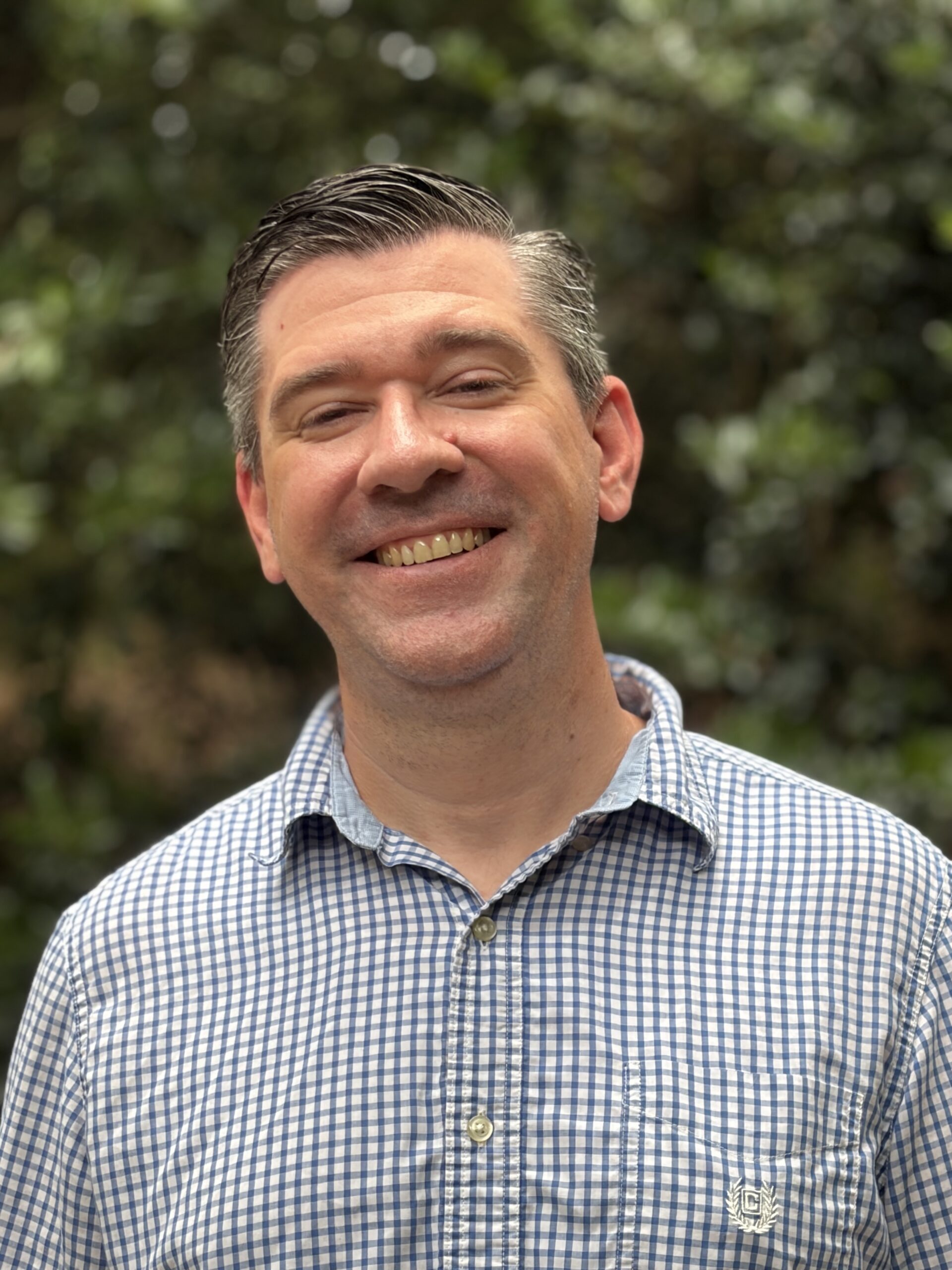
Grow Your Writing with Christopher
Christopher Lowe (he/him) is the author of Make Some Wretched Fool to Pay: Stories, a collection of fiction, and Those Like Us: Stories, an interlocking story collection that functions in the margins between a collection and a novel. He has published three prose chapbooks, including A Guest of the Program, winner of the Iron Horse Literary Review Chapbook Competition. His fiction, nonfiction, and poetry have appeared widely in journals and magazines including Booth, Brevity, Third Coast, Greensboro Review, Permafrost Magazine, and Quarterly West. His craft book Stack, Build, Write: A Guide to Crafting Modular and Non-Linear Fiction is under contract with Bloomsbury Academic. That book explores his longstanding interest in fiction that eschews traditional structures and instead creates meaning through methods other than linear progression. It will be published internationally in 2027. He is currently at work on a novel set in the world of Mississippi high school football and a collection of prose poems responding to the climate crisis on the Louisiana Gulf Coast.
He taught for a decade in the MFA program at McNeese State University in southwest Louisiana before moving to Illinois with his family in the wake of Hurricanes Laura and Delta. While at McNeese, he regularly taught the program’s fiction workshop and Form and Theory of Fiction courses focused on the craft of writing fiction, and he mentored dozens of students who have gone on to publish their work with major journals, magazines, and publishers. Currently, he teaches writing and literature at Sauk Valley Community College and is on the faculty of the University of Chicago Professional Editing certificate program, where he mentors future editors on the art of developmental editing for fiction.
He has served as an editor for a number of literary journals, magazines, and websites, including as the Editor of The McNeese Review and Boudin, an online literary magazine he founded while at McNeese. Most recently he served as a Contributing Editor at Story Magazine.
Insta: @chrislowe1014
Work with PocketMFA
Apply to join a mentor’s small group of writers that they will lead through our unique 12 week mentoring and workshopping program.
Decide if Christopher is Right for You with Our Mentor Interview
What excites you most about writing?
“I’ve always been a tinkerer. When I was a kid, I’d take apart my toys and recombine their pieces in interesting ways. It probably drove my brother crazy, finding our little pile of G.I. Joes with mismatched limbs and heads, but to me, it was thrilling, the act of creating these new characters from the bits of old ones. As an adult, I find myself fiddling with pens, pulling them apart and putting them back together absentmindedly as I chat with students during office hours. There’s an itch in my brain that disassembling and reassembling has always scratched, and one of the things I love most about writing fiction is the ability to do this with story. I love the many, disparate ways that we build a narrative, and I love getting in the weeds of a manuscript I’m working on, figuring out how all of those elements combine and collide to do something they weren’t doing before. I’m at my happiest as a writer when I’ve got a first draft done and I can dive into that material and begin playing with it, stretching and pulling, breaking apart and putting together, inverting and reversing, discovering the engine of the work that was there all along but that I couldn’t see until I played around with what I’d already put on the page,” Christopher says.
What mindset does a writer need to grow?
“In my experience, most writers are bundles of ego and self-doubt. We have a fundamental belief that the writing we’re doing matters in some way. People will read our words and be moved or entertained or thrilled by them. There’s an element of ego in believing you’re capable of conjuring up that kind of experience for a reader. And at the same time, we’re hindered by a belief that we’re not actually capable of reaching that result. There’s a nagging suspicion that we can’t or won’t succeed in reaching what we’re striving for, particularly as we encounter the numerous small-scale challenges that come with writing. The push and pull between ego and self-doubt is a struggle I’ve seen with just about every writer I’ve ever worked with, and navigating those two poles is one of the first things we do to unlock where we’re going as writers. To confront that push and pull, I think we need a mindset of grace for ourselves as writers. When we’re sitting down, facing the page, and things don’t go well, when we feel that intense self-doubt, we need to be able to give ourselves grace and understand that one struggle, one failure is not an indictment of us or of the manuscript. And on the other side, when we feel that ego overwhelming our ability to view the work objectively, we need to offer ourselves grace for that, as well.”
What three words best describe you as a mentor?
“Supportive, steady, and open.”
What makes a good writing mentor?
“When I was in my own MFA program, I would pop in to chat with my mentor, the novelist Neil Connelly. I’d sit there in his office for twenty or thirty minutes and tell him about all the problems I was having with the manuscript of the moment. I’d describe the various ways I was banging my head against the wall of that work, and he’d listen intently, offer encouragement periodically, and often sum up my struggle in such a way that I’d have these little mini epiphanies, my path forward suddenly clear to me without him having to exactly articulate it. I think a lot about how he pulled off that magic trick so consistently. What he was so good at was being an open receiver not just of the work I was writing but of my own thoughts and neuroses about that work. He made me feel comfortable and safe to share that with him, to use him as my sounding board, and because of that comfort level, when he offered his advice or suggestions, they landed with more care and precision than they otherwise would. For me, a good writing mentor is someone who can cultivate that kind of a connection and space for engagement.”
What is your style of feedback?
“I think the most helpful feedback for writers is rooted in authentic response to the work. Writers benefit more from seeing how the manuscript was received than from getting broad proclamations of ways to “fix” the work. I always begin with how the work moved, entertained, or engaged me in some specific way. And then I talk about the areas that I bumped up against. The best feedback, I’ve found, isn’t rooted in a suggestion on how to fix a problem but in exploration of the problem itself. Why is this element not working for me as a reader? Why am I bumping up against this in some particular way? Where are the gaps between these elements and the ones that are working better. In exploring that terrain, writers often arrive at the solutions or “fixes” themselves, and that helps keep the work situated as being inherently theirs. I’m not interested in shaping writers who will write how I write. I’m interested in helping them figure out how to write books and stories in the ways that they want or need to write them.”
What was the most recent "standout" book you read?
“I’m a few years late to the party, but I just finished Deb Olen Unferth’s brilliant Barn 8. It’s a fascinating book, one that uses point of view and time in surprising ways, but it’s also a riveting heist novel. I’m always interested in books that can juggle seemingly at-odds elements without feeling cluttered or jumbled, and Barn 8 is one of my favorite recent books to pull that off.”