
Grow Your Writing with Jessica
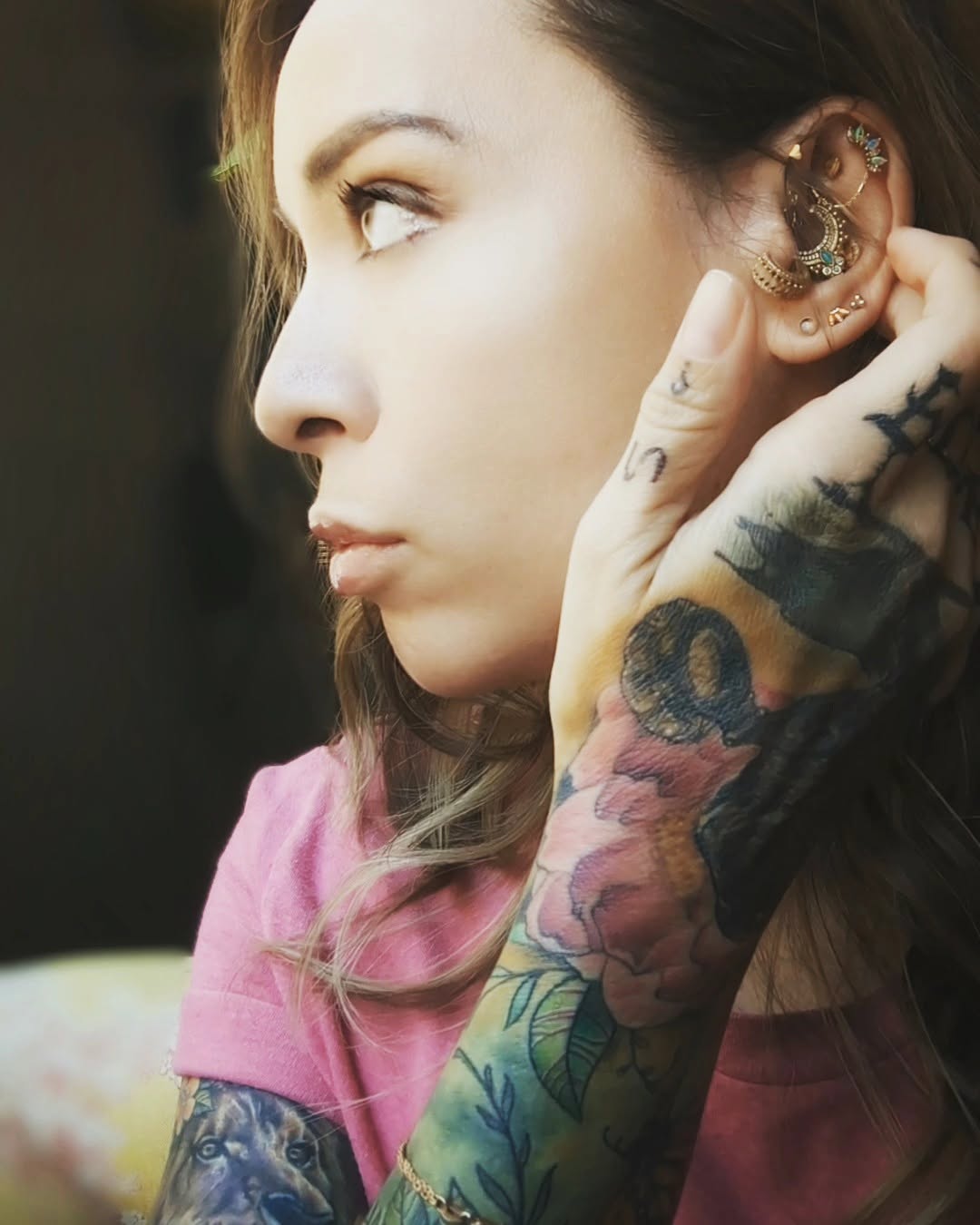
Jessica (Mehta) Doe, PhD, is a Cherokee Nation poet, writer, and interdisciplinary artist whose work explores Indigenous sovereignty, embodiment, and the intersections of ancestral knowledge, the now, and futurism. A former Fulbright Senior Scholar and Mellon Fellow at the Oklahoma Center for the Humanities, her writing moves between experimental poetry, Indigenous horror, and literary fiction, challenging colonial narratives and conventional boundaries of genre and form. Her latest work includes the poetry collection [sp]RED and her short story “Miss Cherokee Princess 1996” opens Never Whistle at Night: Back for Blood. Her forthcoming books with Penguin Random House include the short story collection Those We Feed (2027) and a novel, Sweet Heart (2028), that reimagines through contemporary horror the story of the Cherokee first woman and man. Across poetry and prose, her work engages Indigenous storytelling, bodily autonomy, and the unsettling relationships between violence, inheritance, and reclamation.
Website: https://thischerokeerose.com/
Work with PocketMFA
Join one of PocketMFA’s unique programs to develop your craft, prepare for publication, finish your manuscript, and find your writing community.
Decide if Jessica is Right for You with Our Mentor Interview
What excites you most about writing?
“A psychiatrist once told me, “If you weren’t a writer, I’d prescribe writing [as therapy]. But, clearly, you’ve been self-medicating your entire life. Trauma feeds psychosis; you’d be insane.” I consider writing my best and most natural form of communication. I have poems that I wrote at six-years-old. I feel like I think too quickly, or too jumbled, so words can come out askew (or not at all) and writing is the tool and pace needed to shape my words and voice. It’s difficult, though, having come from a lineage of oral tradition. I come from the first tribe to have a written form of language, Tsalagi syllabary, and it wasn’t created that long ago. However, the creator of our syllabary, Sequoyah, immediately understood the power of the colonizer’s “talking leaves.” For a people, on a pan-Indigenous level, who have faced centuries of forced assimilation and genocide attempts, writing can be a means of better ensuring preservation. Which is harder to burn: books or people? That is an increasingly difficult question to answer.
In short, I write because I have to. I always have, as far back as Memory goes. The way it has affected my life is probably unknown to me for the most part. But, I can say, I am not insane, so perhaps that’s the major factor. Or at least I don’t think I am,” Jessica says.
What mindset does a writer need to grow?
“Curiosity, persistence, a desire for feedback and to better one’s writing while, at the same time, caring less each day about perceived “failures” (typically, rejections). That’s really it, but it’s a lot. I have never personally prescribed to “writing rituals.” I have word counts that I give myself to meet on a weekly basis with dedicated week/s off. This is more important to me when working on novels because the story needs to be fresh and ongoing, otherwise I’ll have to resurrect it (which is a lot more work). Most of us write because we must, so considering a requisite mindset just adds to what is largely a calling of nature. We don’t need a mindset to go to the bathroom; we just go (though, there is a time and place to do so!). Sometimes the end result of both, books and bathrooms, can be similar (but at least we get it out).”
What three words best describe you as a mentor?
“Transparent, detailed, communicative”
What makes a good writing mentor?
“What makes any good partner? Oftentimes it’s just “the right match” and that can be difficult to define (and impossible on a one-size-fits-all basis). I can tell you what I’d want in a mentor: kindness, directness, punctuality and good communication. There can, and should be, compassion while also being straightforward. There is no such thing as a perfect writer who cannot better their work, which means we are all still learning. I try to give those who I am temporarily in the position to guide the kind of pathways and advice I wish I had received and appreciate receiving now. We both want to make your work better, so we’re already halfway there.”
What is your style of feedback?
“I strongly prefer written feedback (see above as to why!). I know what I am good at in terms of guidance and editing, and that is careful line reading, asking questions both I and others may have, offering alternative suggestions, and pointing out what’s already working. I am absolutely terrible at sequencing, so please don’t ask me. I’m happy to talk through feedback as well, but I always do so after having already made written feedback. I like to provide clear examples, an array of optional next steps, and am always up to answer questions if a writer isn’t sure of a particular choice.”
What was the most recent "standout" book you read?
“Without a doubt Debra Magpie Earling’s Perma Red. It was the first book I’d read in a long time that was absolutely beautifully written and a wonderful story. I like heartbreak. I love it when a poet is writing prose (not that Debra identifies as a poet, but she absolutely is). I like to ask people: If you had to choose just one, would you rather read a beautifully written story or a “great story” with mediocre writing. I would choose beautifully written every time. But sometimes, like with Perma Red, we can get both.”