Grow Your Writing with Charles
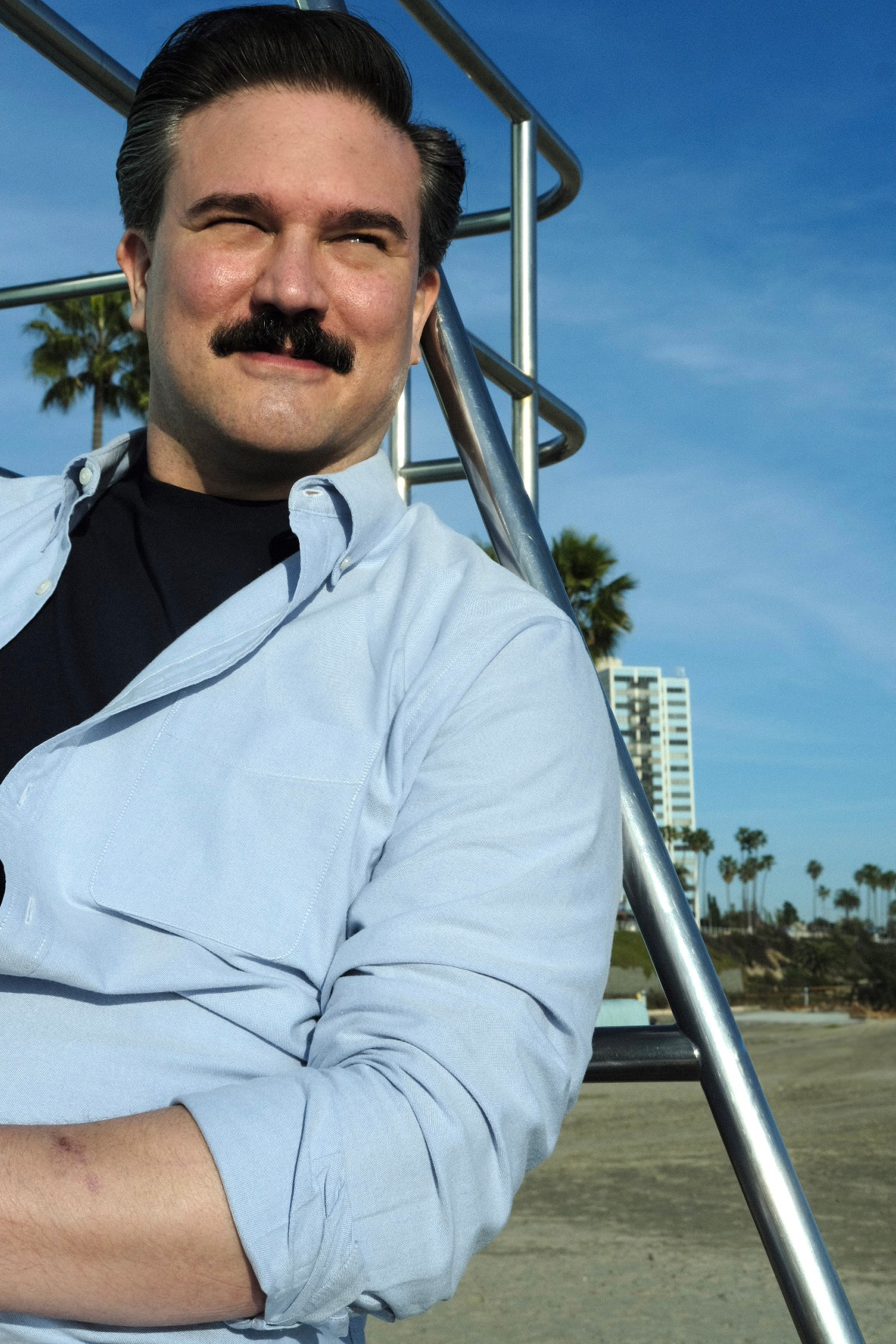
Charles Jensen (he/him) wrote Splice of Life: A Memoir in 13 Film Genres (SFWP, 2024), which braids together in each chapter traditional memoir storytelling with discussion of a single film. His most recent collection of poetry is Instructions between Takeoff and Landing (U of Akron Press, 2022). His previous books include two collections of poetry and seven chapbooks of cross-genre work. The City of Los Angeles Department of Cultural Affairs awarded him a 2024-25 Individual Master Artist Fellowship and in 2019 designated him a Cultural Trailblazer. He is the recipient of the 2020 Outwrite Nonfiction Chapbook Award, 2018 Zócalo Poetry Prize, a Dorothy Sargent Rosenberg Prize, the 2007 Frank O’Hara Chapbook Award, and an Artist’s Project Grant from the Arizona Commission on the Arts. His poetry has appeared in American Poetry Review, Crab Orchard Review, The Journal, New England Review, and Prairie Schooner, and essays have appeared in The Los Angeles Times, 45th Parallel, American Literary Review, Exposition Review, The Florida Review, and Passages North. He founded the digital literary magazine Villain Era to celebrate literature of revenge. He is Vice Chair of the Angels Gate Cultural Center Board of Directors and teaches film studies and creative writing at various organizations.
Website: https://charlesjensenwriter.com, insta @charlesjensen
Decide if Charles is Right for You with Our Mentor Interview
What excites you most about writing?
“Everything about writing excites me! My writing practice grounds me, gives me opportunities to reflect, and inspires me by opening the doors of creativity into every part of my life. I love sharing my passion with developing writers and teaching them things I learned the hard way (or the long way) in hopes their journeys are easier. I think everyone can (and should be) a writer,” Charles says.
What mindset does a writer need to grow?
“Being a writer requires a just-right mix of hubris and humility. The hubris is important because you have to believe you have something valuable, meaningful, and important to say through your writing–something that may help someone else make sense of life and the world around us. The humility is because you must always remember you’re not done learning how to be a writer. There are valuable lessons for writers at every stage of development, and humility will open you to new possibilities. You will discover things you never before considered. You will keep growing.”
What three words best describe you as a mentor?
“Upbeat, encouraging, and….”coachy.” I’m making up that third word. I approach this work just like a coach does. I want to know what your goals for yourself are and where you’re starting from. Then I can better help you make progress toward your goal. Meanwhile, I’m on the sidelines cheering for you. I really emphasize the importance of taking risks, and I think “failure” (whatever that is) is not an outcome but a part of the process. Every first draft should fail. It’s in the process of reviewing your writing and understanding how to revise it that really builds your craft skills. I think so much more can be accomplished in revision than in the first draft.”
What makes a good writing mentor?
“I think a good mentor is first and foremost a good listener–and good at reading the room. Writing is a personal journey, and I don’t think there’s one proscribed path, or one version of “success.” There are so many ways to do this. Basic craft skills can be taught, as can the reflective approach to revising work. A good writing mentor will point to craft exercises and skill development based on what a student wants to do with their writing, and where a mentor sees opportunity to close gaps toward that goal. Not every student should receive the same kind of mentoring, and that’s one of the reasons I love teaching with PocketMFA–we get to customize learning for each student, and then help them all collaborate and make progress together.”
What is your style of feedback?
“I always focus on what is striking or moving about the work. What reaches me personally as a reader. Where I feel surprised or enlightened. Then I look at places where I didn’t feel clarity, where I think there are opportunities to revise. I also like to point out where I see development in craft skills as we go from week to week. I also like to give some lecture and discussion time to talk through techniques or craft lessons that can apply globally to the group.”
What was the most recent "standout" book you read?
“I recently read Stephen S. Mills’s Final Slash Boy and loved it. He’s working in kind of an extended narrative through individual prose pieces concerned with horror cinema and the horrors of modern life. In lieu of line breaks, each poem employs slashes ( / ) in the prose to disrupt and delay the language of each piece. It’s a beautiful book that I think ultimately captures why some of our most mundane activities–loving fully, experiencing the world with vulnerability–are ultimately the bravest.”