
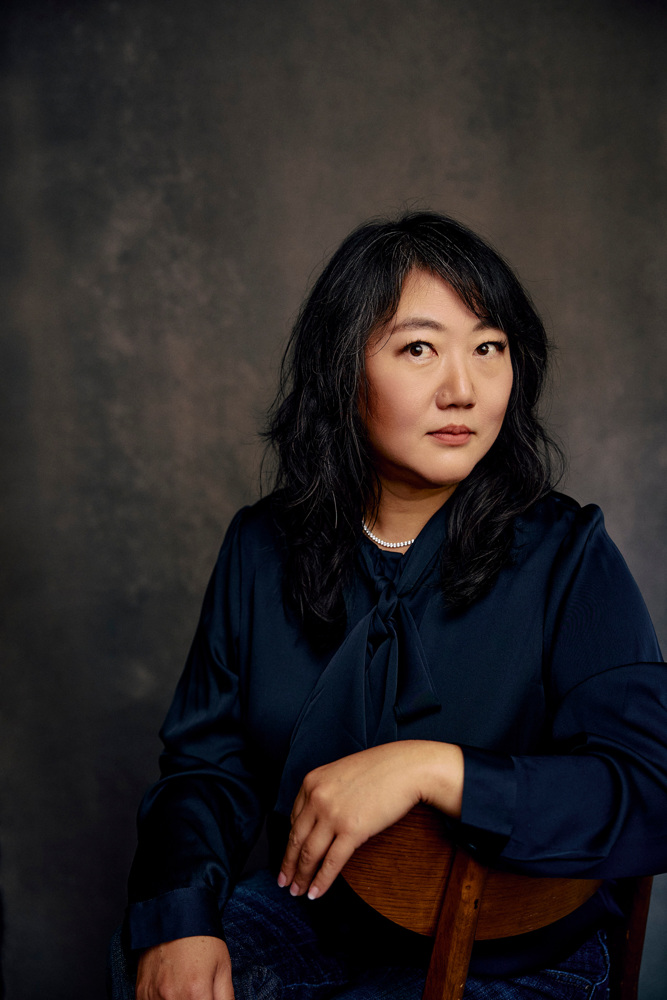
Grow Your Writing with Christine
Christine Hyung-Oak Lee is the author of the memoir Tell Me Everything You Don’t Remember, published by Ecco/HarperCollins in 2017, which was highlighted on NPR’s Weekend Edition with Scott Simon and reviewed by The New York Times and others. It was the first illness memoir written by an Asian American published by a major American publisher. Their fiction and nonfiction appear in the New York Times, BuzzFeed, ZYZZYVA, Guernica, Catapult, The Rumpus, and other literary magazines.
Lee’s work has been honored by Hedgebrook, Community of Writers, Napa Valley Writers’ Conference, Bread Loaf Writers’ Conference, and VONA, where they are current faculty member and board member and a five-time alum. They have taught and mentored creative writing at various writing workshops and MFA programs (VONA, Mendocino Coast Writers’ Conference, Kearny Street Workshop, Fresno State University’s MFA program, Saint Mary’s College of California’s MFA program, Stanford Online High School, and Antioch University’s MFA program), focusing on both literary nonfiction and fiction writing.
Their mission is to change the landscape of literature and amplify previously unheard stories and perspectives; Lee holds teaching and mentoring close to her heart and understands that nurturing emerging voices is a critical component to that outcome. More direct to that mission, Lee has served in editorial roles throughout her writing career at Kartika Review (Fiction Editor), The Rumpus (Features Editor), and currently The Offing, where she is an Essay Editor.
Born in New York City, Lee holds a BA from UC Berkeley and an MFA in Creative Writing from Mills College. When not writing or reading, they can be found inspecting bee hives, quilting, stalking wiener dogs, and/or researching random topics as they occur.
Instagram: https://www.instagram.com/xtinehleewriter
Substack: https://christinehlee.substack.com/
Website: https://www.christinehlee.com/
Work with PocketMFA
Join one of PocketMFA’s unique programs to develop your craft, prepare for publication, finish your manuscript, and find your writing community.
Decide if Christine is Right for You with Our Mentor Interview
What excites you most about writing?
“Writing has been my gateway towards being seen as a human being; growing up Korean American in the 1970s, I was often the very first Korean person people met. It wasn’t until they heard me speak or read my writing that people embraced me or accepted me. My father wanted me to become a writer, but discouraged me from following that path; he told me that no one in America wanted to hear anything I had to say, no matter how valuable or authentic. This was a man who immigrated to the United States just four years after Civil Rights. When I was published for the first time in ZYZZYVA’s Fall 2003 issue, my father remarked, “Oh. America has changed!” It completely changed his outlook on life. And in turn, I became empowered by how my writing (or at least the publication of it) changed him.
I eventually came to realize that writing is a universal way of demonstrating our humanity (now more than ever with the onset of AI-generated writing). We are messy, flawed, beautiful, pained, traumatized, joyful beings and how else to demonstrate those qualities than through art? Through writing?
Writing is the most important thank in my life. When I suffered a stroke that left me with a 15-minute short term memory at the age of 33, I had to pare down my goals. All i wanted to do was to be able to write literary fiction again,” Christine said.
What mindset does a writer need to grow?
“This is a big question! There are so many components to a growth-mindset. Like resilience and getting back up. Like grit and persistence. Like being curious and brave enough to investigate side quests. Like focus on the larger goal. But I personally think that the most critical thing is to understand that every setback is an opportunity. To acknowledge when something didn’t work out or isn’t quite the way we want it to be. But to see it as an opportunity to learn, to grow, to research, to wait, to explore, to process the challenge, and to find a new way forward.”
What three words best describe you as a mentor?
“My former mentees tend to say that I’m supportive, rigorous, and humorous.”
What makes a good writing mentor?
“You know, it’ll be different for each person. I try to see each person as an individual and assess needs. Regardless of whether a person wants a mentor who “keeps it real” or a mentor who is “warm and fuzzy,” I try to be a mentor who helps the writer see their strengths. It is super important to come out of any project knowing what you did WELL. So that no matter what, you know what about yourself you should never change, you know? So that no matter how hard the writing can become, you know what you’re good at. “
What is your style of feedback?
“I do NOT provide content-oriented feedback (which tends to be subjective). I prioritize craft-oriented feedback, because craft-oriented feedback is more actionable. For example, let’s say a writer has a piece with vignettes about hospital visits. Content-oriented feedback might involve, “What happens next? Why are they in the hospital?” or “I really like this line of description.” That’s nice. But does it really help the writer move their manuscript to the next level? What do you do when someone says they like a line?
Craft-oriented feedback, on the other hand, ties critique to craft and action. In this particular piece, craft-oriented feedback would look like, “What is the structure of this manuscript? If repetition is part of the structure, then what is the character’s experience with each hospitalization driving character development, setting, story, and theme forward?” I’d then discuss each hospital scene and the differences between each and relate it to story and character progression.
TL;dr In my own life, when I get confused or stuck, I try to get a “big picture” view of my challenge. I do the same with manuscripts. I try to see the patterns. I try to see the root cause. And i try to teach the craft-level tools so writers can build their toolbox. “
What was the most recent "standout" book you read?
“Uh, it’s a tie. Literally! I’m an odd duck who often reads books simultaneously. And last month, I read Octavia Butler’s KINDRED alongside Rebecca Makkai’s THE GREAT BELIEVERS. I can’t believe I lucked out and read two amazing books side by side like that. I read Butler, because I’d been meaning to for years and years. She is a master of writing genre but also integrating broader social themes into her work. I’d also been meaning to read Makkai for a while (and her Substack is amazing and convinced me to go buy a bunch of her books). The Great Believers has amazing structure that spans time and POV.”